Empowering communities through science
Nearly every week, forensic toxicologist Michelle R. Peace, Ph.D., finds herself communicating science — to lawmakers, the news media, educators and students.
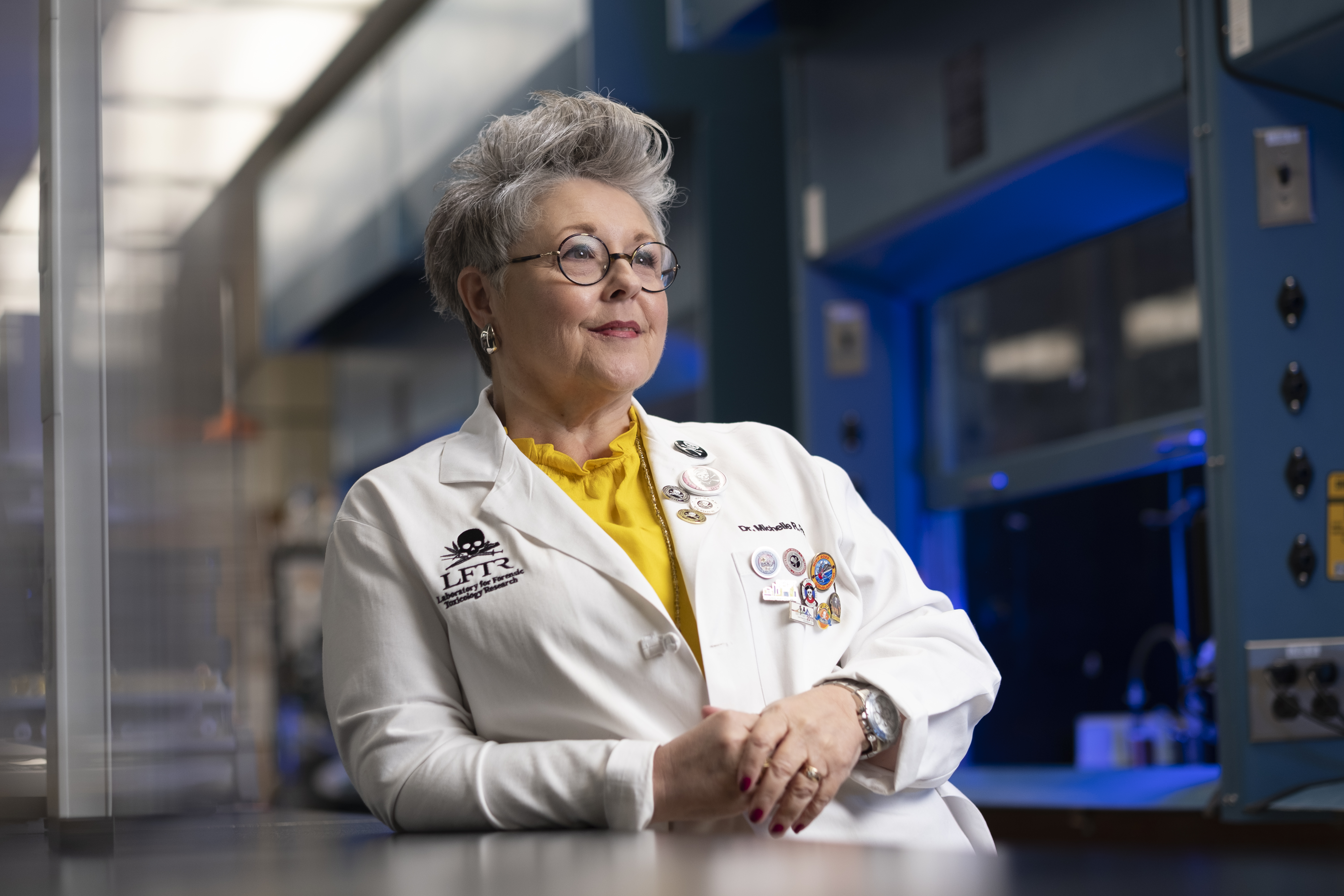
Michelle R. Peace, Ph.D. (Photo by Nathan Hanger, VCU Enterprise Marketing and Communications)
Nearly every week, forensic toxicologist Michelle R. Peace, Ph.D., finds herself communicating science — to lawmakers, to the news media, to educators, to students.
This story was published in the fall 2025 issue of 12th & Marshall. You can find the current and past issues online.
Specifically, she's sharing details of her internationally recognized research on regulating the cannabis industry and children vaping in schools. Broadly, she’s fostering collaboration between the community and scientists.
“The most important thing we’re ever going to do as scientists,” explains Peace, who earned her Ph.D. from the Department of Pathology, “is communicate in a way that gives the community tools, motivation and empowerment.”
We sat down with the VCU Department of Forensic Science professor to discuss how physicians can join her mission.
What do physicians need to know about vaping to better inform their patients, along with their friends and family?
People often choose to vape because they want to switch from nicotine or they think it’s safer. What they don’t realize is that vaping could be potentially more addictive and therefore more difficult to quit. With the potential of more nicotine in the product, a person is likely to become tolerant faster to the amount of nicotine they’re consuming — meaning they’re going to need to consume more. Our physicians are the frontline educators of how people should be thinking about these products. The industry is telling consumers they’re safer than smoking, but the data doesn’t necessarily support that.
Your research has uncovered ingredients such as mold and nail polish remover in thousands of unregulated vape products. How does this happen?
Out of the thousands of vaping products in the marketplace, only 39 have been authorized by the FDA. Consumers simply don’t know what they’re inhaling with unauthorized products. We went in as secret shoppers and had a hard time finding the authorized products in the stores. What we did find were products with an array of solvents, flavoring chemicals, anywhere from 10 to 25 different compounds that aren’t labeled — or are labeled as safe to eat, but not to inhale. Most of the chemicals we actually find have already been classified as an irritant, toxicant or even carcinogenic for lung tissue.
How can pediatricians in particular educate youth?
Help them make an informed decision. We know kids are escaping to the bathrooms to vape and they’re storing the vapes behind or around the toilet at schools. We’ve begun to identify coliform, yeast and other bacteria on those vapes. Inhaling those microbes can lead to headaches and nausea to seizures and significant pulmonary problems and potentially to death. Kids are struggling — vaping is influencing their education. We send our findings to schools each quarter because they need to know what’s happening in real time to make robust decisions.
What’s next?
That’s the current conversation in the forensic toxicology world. How can we be more predictive? Can we collaborate with emergency physicians to get a faster read on what’s happening in the community? How can we better listen in on social media platforms to what people are putting in vapes? Our focus has been nicotine and cannabis, but we can’t overlook the nature of these tools and that they are meant for discreet consumption of any drug.
My research on children vaping in schools and regulating the cannabis industry were very separate questions. Then cannabis and unregulated products started moving toward the kids. Now the projects are intertwined. As much as I talk about this — even 11, 12 years later — I feel like I’m just now making a little bit of a dent.
Her MCV Campus favorites
- Food cart: Christopher’s Runaway Gourmay
- Spot on Campus: Tunnels under the hospital
- Professors: Linda Costanzo, Ph.D., and Alphonse Poklis, Ph.D.
- Class: Intro to Toxicology by Kimber White, Ph.D.
Watch a VCU News video highlighting the work of Michelle Peace, Ph.D., to expose the real ingredients in the thousands of unregulated vapes and cannabis products, so that consumers, particularly youths, can make informed decisions.