Change agent
John L. Beyer, M.D., and the VCU Department of Psychiatry are poised to expand access to mental healthcare — across the region and across the lifespan.
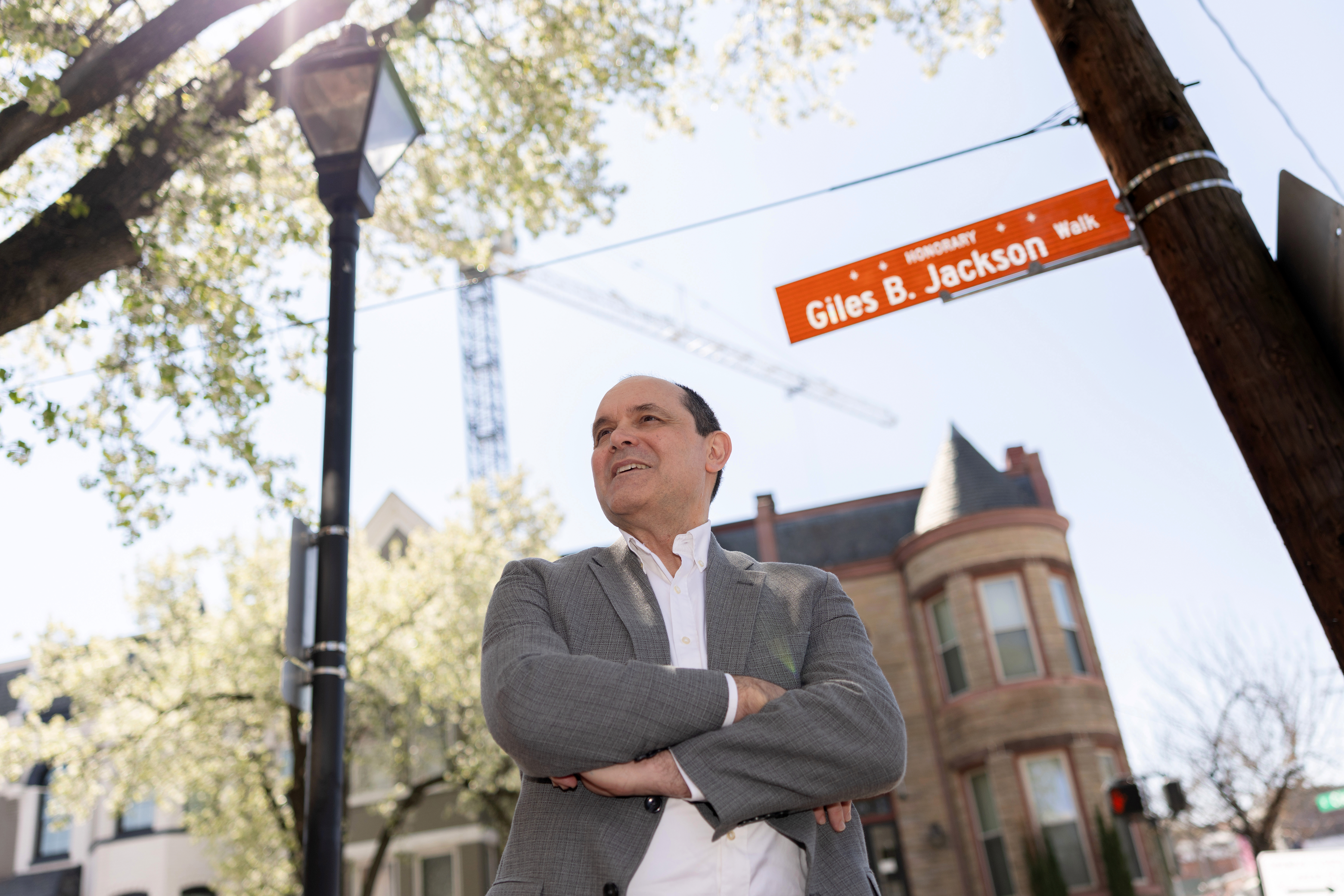
John L. Beyer, M.D. (Photography by Daniel Sangjib Min, MCV Foundation)
Sometimes you go looking for a life’s calling. Sometimes, it finds you.
This story was published in the spring 2026 issue of 12th & Marshall. You can find the current and past issues online.
For John L. Beyer, M.D., that serendipity took place in the early 1990s at the Nashville Veterans Affairs Hospital, where he worked as an inpatient director in mental healthcare. He had recently completed his psychiatry residency at Duke University and found himself treating aging Korean and Vietnam war veterans. For many of Beyer’s patients, their mental health conditions were intertwined with physical and cognitive changes of advancing age, at times compounded by injuries and PTSD from decades-past wars.
Some might have found this tangled web too daunting, but Beyer was intrigued. “The potential to better help these older patients by trying to understand, as we age, how we change and how our mental health changes appealed to me,” says Beyer, now professor and vice chair of the VCU School of Medicine’s Department of Psychiatry and director of its ambulatory services.
Drawn to psychiatry for its relationships and one-on-one interactions, he says the time he spent getting to know his older patients at the VA led him to pursue geriatric psychiatry, which was then a relatively new field.
While in Nashville, Beyer also treated patients at Vanderbilt University Medical Center, where his mood disorders research focused on understanding why some people were vulnerable to depression while others, even if experiencing similar risks or adversities, seemed to be more resilient. With his colleagues, he began exploring whether neuroimaging might offer a new way of “looking into the brain” to help answer that question.
“We drew on that research to treat patients in the mood disorders clinic to see how do we best treat and support patients with depression and how do we best treat and support patients with bipolar disorder,” Beyer says.
When he returned to Duke — his former training ground — as faculty a few years later, he combined his research interests with his newfound commitment to better serving geriatric patients. “I began working with colleagues looking at mood disorders and bipolar disorder in older adults and how these change as we age, and how mood disorders may be interacting with cognitive changes. That has been the basis of my research for more than two decades.”
‘It does take a special person’
Double board-certified in both adult and geriatric psychiatry — or geropsychiatry — Beyer arrived on the MCV Campus in 2024, bringing his comprehensive experience in the mental health of older adults at a time when the need is growing more acute.

Drawn to geropsychiatry for the complexity of its cases, Beyer helps older patients sort out normal cognitive changes of age from possible early signs of neurocognitive disease.
By 2050, a projected 82 million Americans, or 23% of the U.S. population, will be 65 or older, according to the U.S. Census Bureau. Not simply adults with more wrinkles, seniors represent a unique patient population in psychiatry. They face the grief of accumulating losses that comes with advanced age — surrendering their sense of identity and purpose of a career, physical decline and the deaths of friends and loved ones.
With these losses and limitations, they’re more vulnerable to isolation, loneliness and depression. The risk of cognitive impairment, including Alzheimer’s disease and dementia, increases with age as well, and these conditions themselves can be accompanied by mood and behavior changes.
Ageism and the lack of specialists trained in working with older patients may result in treatable mental health conditions being ignored or dismissed as simply the inevitable accompaniments of age, even though interventions may exist. The U.S. is home to only 1,300 geriatric psychiatrists, Beyer says, noting that many psychiatry fellowship positions go unfilled each year.
“It does take a special person to pursue this subspeciality,” says geropsychiatrist David C. Steffens, M.D., chair of the Department of Psychiatry at the University of Connecticut School of Medicine and a former colleague of Beyer, whom he has known since their residency training days at Duke. “Eventually many of our patients will die while they’re still our patients, just through the aging process. You have to be accepting of that.”
Meanwhile, he adds, geropsychiatry is a multidisciplinary field requiring collaboration across nursing and social work as well as primary care, neurology and other specialties — not to mention building relationships with patients’ caregivers. “Geriatric psychiatrists often find themselves in the position of both clinicians and educators,” Steffens says.
He describes Beyer as a quadruple threat — a skilled and collaborative administrator, engaged educator, insightful researcher, and a deeply knowledgeable, kind and compassionate clinician. “He is someone who listens well,” Steffens says. “Somebody who people trust. He was seen as the go-to person at Duke if you had a referral of somebody who needed careful evaluation,” particularly for patients not responding despite a range of treatment efforts.
Because geriatric patient cases are often complex, with other health issues in the mix, it’s challenging to sort out normal cognitive changes of age from possible early signs of neurocognitive disease — and then determine how these interact with mood disorders. “Cognitive and emotional changes go hand-in-hand,” Beyer says.
Yet the nuanced nature of the work is what draws him and others to the subspecialty. A 2019 survey published in the Canadian Geriatrics Journal revealed the top reasons American and Canadian geropsychiatry fellows pursue the field: working with families, the interdisciplinary setting and the complexity of cases.
‘If not us, who?’
Beyer’s strengths in treating adult and geriatric patients complement those of VCU Department of Psychiatry Chair Robert L. Findling, M’87, whose career has focused on child and adolescent psychiatry. Together, they serve as a leadership team with a combined expertise and shared vision for the work of expanding the health system’s clinical, research and educational impact. They’re committed to its ability to deliver care and improve mental health and well-being across the lifespan.
“John has distinct and unique skills that will help VCU pioneer this more comprehensive approach to caring for and enhancing the lives of seniors,” says Findling, who holds a C. Kenneth and Dianne Wright Distinguished Chair in Clinical and Translational Research. “Instead of focusing on a single condition alone, we have decided to focus on a population that has multiple unmet needs. More than half of adults with behavioral or mental health challenges don’t get treated. If not us, who?”
Since arriving in Richmond, Beyer has worked to support research, expand mental healthcare education to nurse practitioners in rural Virginia and bring care to those same communities — along with the growing retiree population in Williamsburg and the Northern Neck.
“I came here specifically to help develop our outpatient services,” Beyer says. “VCU is not just a hospital and outpatient hospital system but an expanding system of healthcare across south central and central Virginia, and the challenges of providing and coordinating mental health services for those communities excites me.”
Neuroimaging technologies like functional MRI and PET scans also energize Beyer as geriatric psychiatrists work to better understand pathways that modulate emotions inside the brain, leading to improved interventions and insight into how different people react to different life events.
This work could yield increasingly personalized and more effective approaches to treatment, moving from a broad-brush “Will this treat depression?” to a targeted “Can we treat the symptoms specific to this patient?” Think of depression’s accompanying sleep problems, acute sadness or lack of motivation.
Meanwhile, Beyer is leading the department’s efforts to incorporate leading-edge therapies such as nasally administered esketamine, an intervention he says can treat depression in a matter of days to weeks rather than the traditional month or more. He’s also helping to expand transcranial magnetic stimulation, a noninvasive therapy shown to be effective for treatment-resistant depression, as well as exploring artificial intelligence technologies — with the guidance of an ethics committee — and how AI might be incorporated to help triage and personalize care or extend therapeutic support beyond the clinical setting.
Above all, his vision remains strong: Support the community in building resilience and connection, reduce vulnerabilities and strengthen mental well-being — across the region and across the lifespan.