Redefining wellness
How VCU Health, Massey Comprehensive Cancer Center and the School of Medicine are supporting the well-being of patients, students and the community in uncommon ways.

VCU Health Pauley Heart Center’s Teach BP program educates students about high blood pressure and how it can harm vital organs throughout the body. (Photo by Daniel Sangjib Min, MCV Foundation)
Championing tomorrow's physicians today
This story was published in the spring 2026 issue of 12th & Marshall. You can find the current and past issues online.
Think back to your days on the MCV Campus. The long hours, extensive study and sometimes overwhelming responsibility.
Now imagine that you also are unexpectedly facing financial hardship – through no fault of your own. Although you’re in good academic standing, the only option may be taking a leave of absence and putting your dreams on hold.
.jpg)
Longtime VCU Health supporters and Founders’ Society members Melissa and Mark Christian recently established a fund to benefit medical students facing emergency expenses. (Photo by Jud Froelich, VCU Development and Alumni Relations)
That was the predicament for one medical student last fall who faced the possibility of not being able to return for the spring semester, if ever. Thankfully, longtime VCU Health supporters Melissa and Mark Christian answered the urgent call for help and, in December, made a gift to establish a student emergency fund in the School of Medicine.
“When we heard the plight of this student, we saw it as a worthy cause,” Melissa Christian says. “It was like giving a Christmas present.”
And one that will continue to deliver gifts for years to come — both for students in need and, ultimately, the future patients who will benefit from their MCV Campus training. Going forward, the Melissa and Mark Christian and Family Fund for Medical Student Support will benefit students navigating unexpected expenses, medical and family emergencies, and other crises.
Most importantly, the fund provided immediate relief for the student who was in need last fall — and who now remains enrolled and on track.
The Christians have a special appreciation for the challenges facing today’s medical students. They watched their son-in-law, Antonio A. Dominguez, M’23, earn his degree while also balancing life as a husband to their daughter, Elizabeth, and father to the couple’s young children. Ever the doting grandparents, they were happy to help with child care during medical school and continue to do so now that Dominguez is completing his general surgery residency training at VCU Health.
“After watching Antonio go through so much to graduate from medical school and get into residency, we felt the student couldn’t be held back because of an emergency,” Mark Christian says. “This was an immediate need.”
It isn’t the first time the Christians have felt compelled to make an impact at VCU Health. They’ve also supported the research for Parkinson’s and movement disorders, adult and pediatric mental health programs, and cancer advances. In 2024, they were inducted into the VCU Founders’ Society, recognizing them among the most generous and engaged supporters of the university and the health system.
They now encourage others to join them in growing the dedicated emergency fund and supporting student financial wellness.
“Your child could be one of those students who is struggling, and it would break your heart if you didn’t have the means to help them,” Melissa Christian says. “It makes me feel good that when there was a need, we could say yes.”

Patient Melissa Earley (right) hugs Lilton Sykes, a chef with VCU Dining Services, whom she met while undergoing treatment at VCU Massey Comprehensive Cancer Center. (Photography by Daniel Sangjib Min, MCV Foundation)
Helping cancer patients focus on health, not hunger
Life is very different now for Melissa Earley. The day that I got my diagnosis, my life changed forever,” she says softly. “My head was spinning.”
In 2023, a tumor the size of a baseball was removed from Earley’s breast at VCU Massey Comprehensive Cancer Center. Her treatments, which will continue for several years, sometimes wipe her out for days at a time or land her in the hospital.
So she had to stop working. The financial hit has further strained her already fatigued mind and body as well as exposed her to the grim realities of life for many cancer survivors. What money she had was, by necessity, allocated to other bills. Food — among the most basic of necessities — became a daily concern.
“The ability to fill our fridge got harder and harder, and then it got to where we wouldn’t have food in the house,” Earley says.
Over the last year and a half, she and her partner, Nona, have struggled to eat. She has accepted meals from her church and other friends. Kind souls give them grocery store gift cards. Earley sheepishly admits she would sign up for public events if there was food involved, just so she could eat and maybe take leftovers home.
As someone who worked as a paramedic and a nurse, Earley says she was used to being the one to offer aid and solve problems.
“But I couldn’t figure this out,” she says.
Earley isn’t alone.
Thirteen percent of people in the United States do not have enough to eat or know where their next meal will come from, according to the U.S. Department of Agriculture. People who have cancer are more impacted by food insecurity compared to the national average, with numbers ranging from 17% to as high as 55% of the patient population.
About 40% of cancer patients surveyed by Massey in 2023 reported some level of food insecurity, which was jarring to Susan Hong, M.D., the director of the center’s cancer survivorship program.
“There’s a lot of financial toxicity associated with cancer,” Hong says. “Cancer has a massive impact on people’s lives and their ability to work. If you can’t eat or access food, that’s going to have a ripple effect. Poor nutrition affects your ability to tolerate treatments, and that adds a huge layer of stress to your life.”
How Food is Medicine program reduces cancer's burden
Under Hong’s leadership, the cancer center established a plan called Reducing Cancer’s Burden, from which came the initiative shepherded by the MCV Foundation and funded by the McKesson Foundation called In Cancer Care, Food is Medicine.
Food is Medicine has a three-pronged approach that includes providing patients with emergency food boxes from the local nonprofit Feed More plus connections to additional resources within the community; cooking and nutrition classes for patients and their caregivers; and permanent spaces within the VCU Health Adult Outpatient Pavilion where patients can access nonperishable as well as fresh seasonal food.
Thus far, Hong says, Food is Medicine has been exceedingly effective.
In its first year, Massey is already surpassing some of its goals. More than 300 boxes of emergency food have been distributed — four months earlier than expected.
Monthly and quarterly nutrition classes are registered to capacity, and participants routinely receive basic kitchen equipment and fresh food along with cooking demonstrations, easy-to-follow recipes and produce vouchers.
“Being in an environment where you’re not alone, where there are resources we can provide to you, makes a big difference,” Hong says.
Finding a place to heal

VCU Massey Comprehensive Cancer Center patient Melissa Earley (right) talks with a fellow shopper at a neighborhood food stand.
During a treatment session last year, Earley was introduced to Food is Medicine when she was handed an emergency box of food.
“It was like magic,” she remembers thinking. “It was so heavy and when I opened it, there was enough food in there for like a week, maybe two.”
She also received vouchers to purchase fresh produce from Shalom Farms.
“They gave me what looked like Monopoly money; but it was real, it was spendable,” she says excitedly. “And that money would buy a lot, and they told me I could get more the next time.
“I just cried,” she adds.
The outreach underscores why she chose VCU Health and Massey for treatment.
“I knew I wanted my treatment at Massey,” she says. “Hands-down this is where I wanted to be.”
Superior medical treatment is only part of the reason for that gratitude.
“Here, I’m not just a patient; I’m Melissa, and I have relationships with people. People know what’s going on in my world when I come here,” she says. “You don’t find that everywhere, but that’s a big deal.”
Earley says Massey understands that healing the whole person is crucial.
“Cancer is a beast, and if you have it, you need everything possible to fight it,” she says. “My body doesn’t crave chemo. My body doesn’t crave the pills I take. But my body craves food, and none of that other stuff matters if I don’t have something to eat.”
Despite what she’s been through, Earley is grateful for her medical team and everyone she’s met through treatment at Massey and VCU Health, and for the support from organizations like the McKesson Foundation that allow her to focus on health and not hunger.
“I didn’t choose to be a cancer patient, but I chose to be a Massey patient,” she says. “This is not just a place to come for medical treatment, it’s a place to heal.”
Building heart health and inspiring young minds
Heart disease is the leading cause of death for Americans. That’s why the VCU Health Pauley Heart Center believes establishing healthy habits from a young age is vital to combatting what are largely preventable deaths.
With philanthropic funding from donors alongside state grants, Pauley recently expanded its Heart Heroes outreach program. The partnership with local schools teaches students about heart health and exposes them to healthcare careers, including cardiology. The program’s initial elementary school offering, Teach BP, launched in 2023, followed by the Heart Heroes Ambassador Program for high school students.
Teach BP
According to the Centers for Disease Control and Prevention, the city of Hopewell, Virginia, faces higher rates of hypertension than its surrounding counties. Pauley’s Teach BP is working to turn the statistics around.
Through the program, fourth graders in all three of Hopewell’s elementary schools learn about the dangers of high blood pressure, how to take and interpret blood pressure readings, and how to reduce the risk of hypertension.
“This program does three wonderful things, explains Sangeeta Shah, M.D., an associate professor in the Division of Cardiology who developed Teach BP and serves as director of Pauley’s adult congenital heart disease program. “We empower children to ask questions about their health; expose them to VCU students who are pursuing careers in science, medicine and research; and start a positive ripple effect on the personal health of their families, communities and, hopefully, themselves in the short- and long-term.”
After completing Teach BP, 79% of students can accurately take blood pressure. In an unexpected result, one teacher credits the program with saving her life.
“I’m really not sure if I would be sitting here today without the student,” says Patrick Copeland Elementary’s Phyllis Byrd, Ph.D. “Even with the headaches and the discomfort of the chest pains, it never occurred to me that it could be my blood pressure.”

Pictured left to right: Members of VCU Health Pauley Heart Center’s community outreach team Jennifer Hundley, Jasmine Williams and Cheryl Rocha, along with Rashid Hines, Hopewell High School’s work-based learning coordinator. Contributed photo
But when a student asked to take her blood pressure and found it was high, she got the reading confirmed by her physician and was prescribed blood pressure medication.
Heart Heroes Ambassadors
Noting the success of Teach BP, Hopewell community members collaborated with Pauley to develop an opportunity for high schoolers to connect with and explore postsecondary healthcare career options. The Heart Heroes Ambassador Program started in the 2025-26 school year.
An inaugural cohort of 13 students at Hopewell High School was selected from a pool of 87 applicants. The students learn from guest speakers and healthcare career workshops as well as practice interview skills, write resumes and cover letters, and work on applications for jobs and training programs.
They also help lead Teach BP lessons for fourth graders and organize a career fair for middle schoolers.
In all, a total of 320 Hopewell students took part in Teach BP and Heart Heroes programs this past school year. Leaders at Pauley want to eventually expand the offerings to more than 800 students annually. Plans include launching kindergarten programming in the 2026-27 school year and expanding into Petersburg, another community with elevated rates of heart disease.
Healing trauma, inside and outside the hospital walls
As the medical director of the only comprehensive Level I trauma center and network in the region, Michel B. Aboutanos, M.D., H’00, believes hospitals should play a key part in reducing life-altering injuries and violence, not just treat those impacted by them.
“Here at VCU Health, we’ve had a paradigm shift of what the role of the trauma center is,” says Aboutanos, professor of surgery and chair of the Division of Acute Care Surgical Services. “We’re part of the community instead of just being on the receiving end of the effects of violence and high-risk behaviors.”
Through donor and grant support, VCU Health’s Injury and Violence Prevention Program applies proven methods to promote safety and wellness.
Breaking the cycle of violence

Darrell Anderson was shot five times in September 2020. He is now a Bridging the Gap peer support specialist and was honored at the 2024 Shining Knight Gala for his work helping others rebuild their lives. (Photo by Duane Berger Photography)
While Aboutanos remains proud of the high level of clinical care the multidisciplinary trauma team provides, he knows they face a troubling trend when it comes to victims of violence.
“We’d take care of the patient and send them back out into the community, only to have them come right back with another gunshot wound, another stab wound. It’s a vicious cycle.”
That’s why in 2003, he helped launch Bridging the Gap, a hospital-based community violence intervention program. Early in their hospital stay, patients are offered intensive case management services such as housing assistance, enrollment in educational and vocational programs, connection to positive social outlets, and access to mental health services.
It often takes multiple conversations with patients before they commit to the program, but Aboutanos says the extra effort is worth it.
“We gain their trust. In the hospital, they are in a state where they are far more likely to listen and change,” Aboutanos explains. “We tell them, ‘I am here for you. Whatever you’ve been involved with, let’s talk about it. If you trust me enough to care for you, to operate on you, to help you heal, can you trust me to connect you with a team and with resources that can and will help you?’”
Between 200 and 300 people benefit from the Bridging the Gap program each year, and it has become a national model for healthcare centers across the country. Researchers found Bridging the Gap participants were nearly 70% less likely to return with another injury from violence than patients who declined to participate, with some patients coming back to serve as case managers.
Reducing high-risk behaviors in youth
While every death can take its toll on healthcare providers, losing a young patient can shake even seasoned physicians like Aboutanos.
“It is devastating to walk up to a mom and tell her, ‘I’m sorry, your child did not make it,’” Aboutanos shares. “That scream — it just doesn’t leave you. So in our trauma center, we want to prevent the very injuries that we see and the suffering that we witness daily.”
Enter Project IMPACT. The program — Impacting Minors Perceptions and Attitudes Concerning Trauma — focuses on student-targeted injury and violence prevention by providing education and awareness about the realities of trauma. A multidisciplinary team visits local high schools to present information about high-risk behaviors and how injuries and deaths can be prevented. Students also participate in simulations and mock scenarios, such as a deadly car crash caused by distracted driving.
“Just telling teenagers doesn’t work,” says Aboutanos, who holds the Rao Ivatury, M.D., Professorship. “With Project IMPACT, they see the person who died being put in a body bag. They see the reaction of their simulated parents. They see what we do in the field and in the hospital to try to save someone.”
Project IMPACT began in 2012 and now reaches between 5,000 and 6,000 students per year in nearly two dozen school districts. Some students even reach out to shadow healthcare professionals and first responders following the school visits.
“No death is going to be in vain. It is my hope that we use those stories to help somebody else,” Aboutanos says. “People who invest in these programs can be assured through our research that they work, and that makes a big difference.”
Dimensions of wellness and support
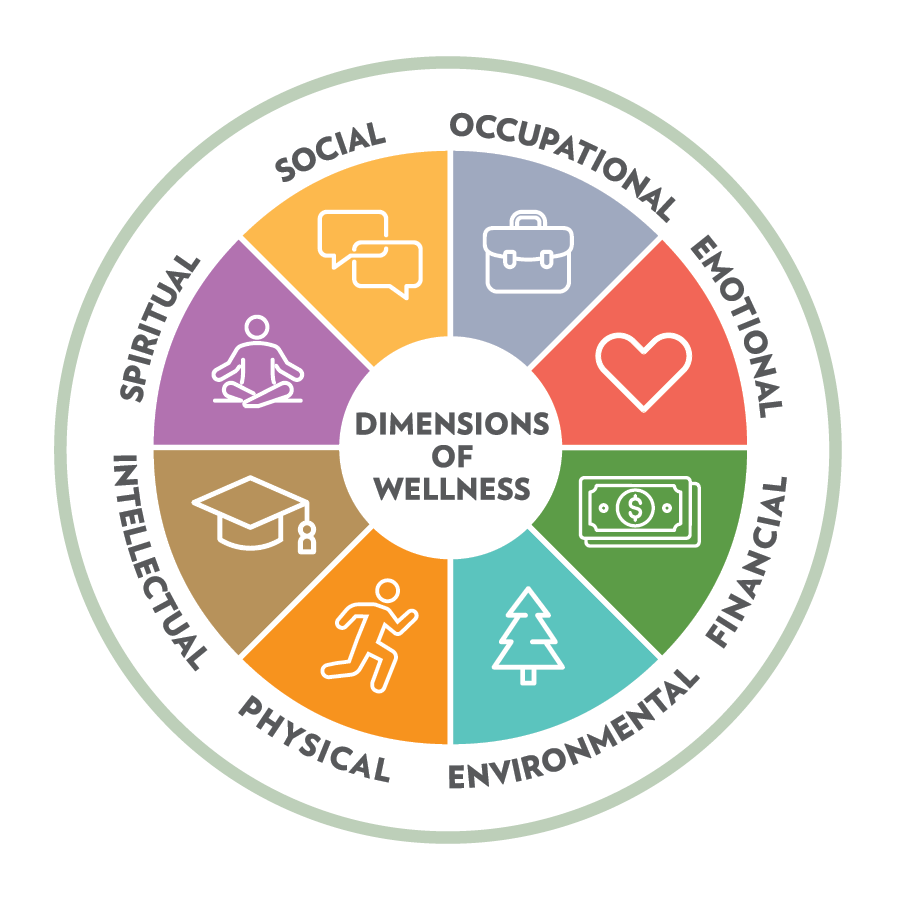
Dimensions of wellness
VCU and VCU Health promote eight dimensions of well-being — physical, emotional, financial, intellectual, occupational, environmental, social and spiritual.
“At the School of Medicine and VCU Health, we believe we have a duty to support the whole student, the whole patient and the whole community,” says Niles Eggleston, senior associate vice president for Medical Philanthropy and Alumni Relations. “The generosity of our philanthropic partners makes it possible to expand the ways we promote well-being.”
Every gift and every action taken during the Unlocking Potential: VCU Campaign for the Future helps carry forward the mission that began with the medical school’s founding in 1838, fueling innovation, driving breakthroughs and creating meaningful impact.
If you're interested in advancing the well-being of students, patients, or the community through:
- Melissa and Mark Christian and Family Fund for Medical Student Support
Contact Nathan Bick at (804) 857-7129 or ngbick@vcu.edu - Food is Medicine
Contact Carissa Liverpool at (804) 833-5539 or liverpoolc@vcu.edu - Heart Heroes
Contact Justin Jannuzzi at (804) 830-2439 or jannuzzijp@vcu.edu - Bridging the Gap or Project IMPACT
Contact Andrew Hartley at (804) 869-0520 or aphartle@vcu.edu